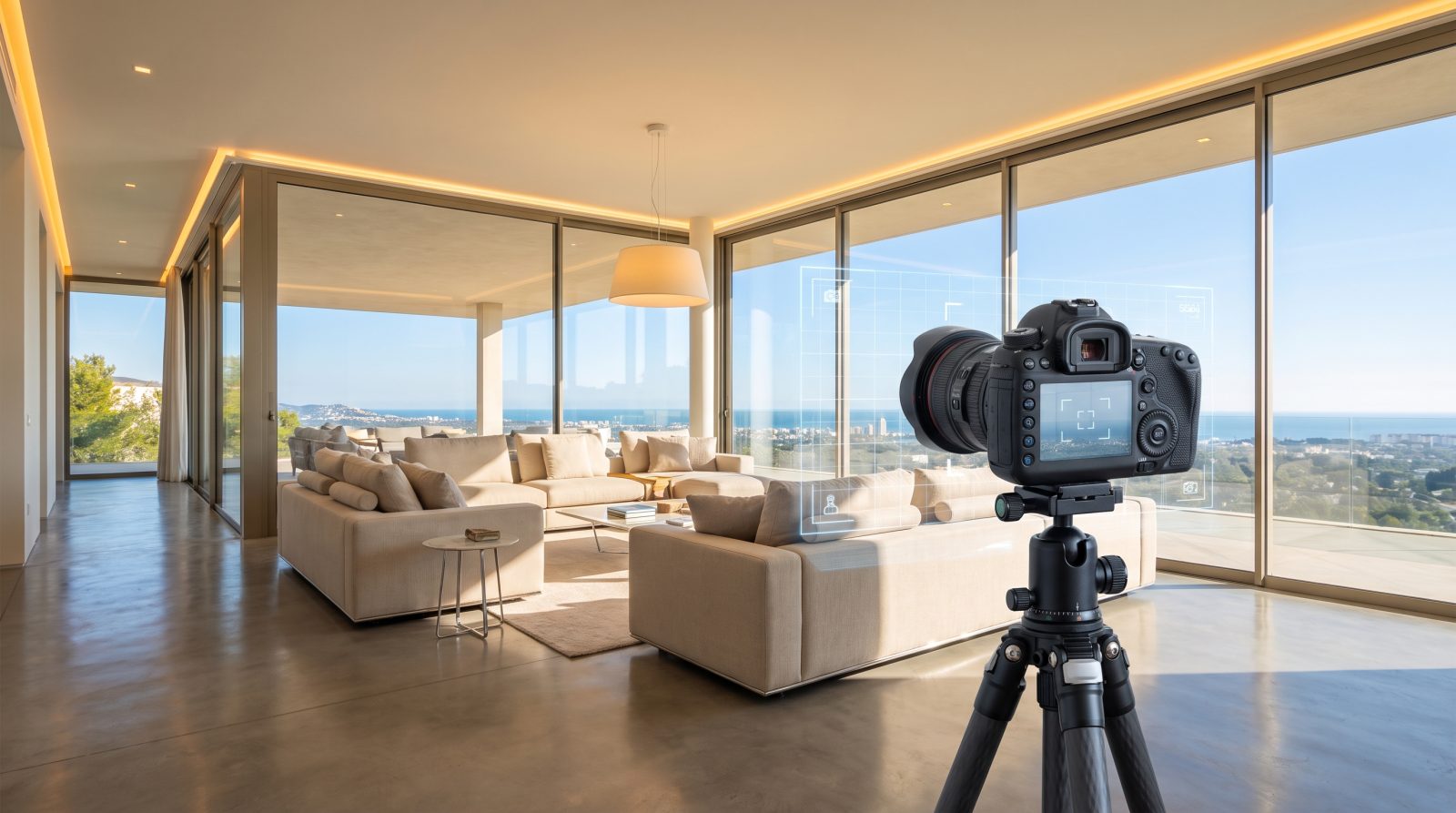
Photos are the one listing asset buyers actually rank first
In the National Association of Realtors 2025 Profile of Home Buyers and Sellers, 81 percent of buyers rated photos as a very useful website feature, ahead of every other item on the list. Detailed property information came second at 77 percent, floor plans third at 57 percent, virtual tours at 38 percent, and video at 29 percent. That survey covered transactions closed between July 2024 and June 2025, so it reflects how people shopped for a home very recently.
Everything downstream of the photos depends on them. The listing video is built from them, the portal thumbnail is one of them, and the decision to book a showing usually happens while scrolling through them. Getting the photos right is the highest leverage hour in marketing a listing, and it is the hour most often handed off without a brief.
A wrinkle worth knowing about that ranking
NAR has published a different number for what looks like the same question. Its Real Estate in a Digital Age report put photos at 89 percent very useful in both its 2017 and 2021 editions, and no newer edition of that particular report appears to exist. Two real NAR reports, two survey instruments, two numbers. If you are quoting a figure to a seller, name which report it came from, because someone eventually checks.
Zillow's own 2025 Consumer Housing Trends Report asked a sharper question and got a genuinely surprising answer. When buyers were asked to name the single most important listing feature, floor plans led at 33 percent and high resolution photos came second at 26 percent, up from 23 percent the previous year. That survey drew on more than 37,600 responses gathered between March and September 2025. Photos being universally useful and floor plans being the single most decisive feature are both true at once, and the practical takeaway is that a listing with excellent photos and no floor plan is leaving something on the table.
How many photos a listing actually needs
The most cited research here is Zillow's own analysis, which found that a home with fewer than nine photos was about 20 percent less likely to sell within sixty days than a home with 22 to 27 photos. It used survival analysis on listings that sat at least a week. It is also built on data from late 2014 through March 2015, which makes it roughly a decade old, and homes with 28 or more photos in that same analysis sold slightly slower while also being 12 percent more expensive, which looks like a property mix effect rather than evidence that more photos hurt.
Treat the range as a sound rule of thumb rather than a current finding. Somewhere in the low to mid twenties covers a typical home without padding. Below nine photos, buyers start assuming something is being hidden, and that instinct has not changed since 2015.
MLS rules push in the same direction from the other end. Several set a minimum rather than a maximum: the Houston Association of Realtors requires at least six unique images within ten days of the list date, three for a to be built listing. California Regional MLS states outright that there is no limit on how many photographs can be uploaded. The tidy tables of per MLS photo maximums that circulate in vendor blogs mostly trace to one unsourced aggregator, so check your own MLS rather than a table.
The photo statistics that fall apart when you check them
Two numbers get repeated constantly in this corner of the industry and neither survives a look at the source.
The first is that HDR photos sell homes 50 percent faster and generate 118 percent more views. It appears in trade press and vendor blogs alike, always credited to a single company name with no study, sample size, or methodology behind it. The second is that homes with professional photos sell for 47 percent more per square foot and 32 percent faster, sometimes rendered as 89 days versus 123. That one is attributed to an unnamed Chicago based study that nobody links to.
This is the same pattern as the 403 percent inquiry claim covered in the business case guide. A number gets published once without a source, gets quoted by three blogs, and eventually shows up in an article that credits it to NAR. Repeating one to a seller who checks costs more credibility than the stat was ever going to buy.
What the evidence on professional photography does support
Redfin's own analysis found that at the 200,000 to one million dollar range, listings shot with professional equipment sold for roughly 3,400 to 11,200 dollars more relative to list price, and that around the 400,000 mark they sold about three weeks faster than amateur shot listings. Above a million dollars the effect disappeared, which makes sense: at that tier everyone already hires a photographer, so there is no gap to measure.
The most interesting finding in it was about sharpness rather than gear. The sharpest ten percent of photos sold at or above list price 44 percent of the time, against 13 percent for listings with average sharpness. Two honest caveats: the underlying study dates to 2013, and it is correlational brokerage data rather than a controlled experiment. Listings with professional photos tend to be better prepared listings in general. The direction is real, the precise dollar figures are old.
What a photographer costs in 2026
This is a fragmented local market with no authoritative survey, so these are observed ranges rather than research findings, and your market may sit outside them. A standard shoot on a home under 3,000 square feet generally runs about 150 to 350 dollars. Three to five thousand square feet runs roughly 280 to 650 depending on the city. Luxury and very large homes start around 400 and climb past 1,000.
Add ons follow their own logic. Drone coverage typically adds 99 to 250, more in dense urban markets. A genuine on site twilight shoot runs 150 to 350, while a simulated twilight edit applied to a daytime photo runs more like 50 to 75 per image, and those two products are easy to confuse when reading a quote. Virtual staging runs 40 to 75 per photo through a photo editing service, or 50 to 200 per room. Standard turnaround is 24 to 48 hours, with rush delivery adding 50 to 150.
One useful correction from a photographer's own pricing breakdown: HDR in a quote often describes the processing workflow rather than a premium tier, so it is worth asking what specifically is different rather than assuming it signals higher quality.
Phone versus camera, in specifics rather than vibes
A recent phone takes a good photo of a well lit room. The places it reliably falls down are narrow and worth naming, because they are exactly the shots that sell houses.
Bright windows against a dim interior is the first. A camera captures a much wider dynamic range in one frame, and a photographer bracketing multiple exposures gets both the view outside and the room inside correctly exposed. Phone computational HDR approximates this and often looks artificial doing it, with a characteristic flat grey cast on the window wall.
Lens distortion is the second. Phone ultrawide modes bend straight lines, which is barely noticeable in a landscape and very noticeable in a room, where door frames and countertops are the reference the eye uses. Third is low light noise in rooms without much natural light, where phone shots go grainy or unevenly bright. Fourth is that phones mostly hand you a processed file rather than raw data, so an editor has far less room to recover a shot afterward.
Worth noting these points come from photography services with an interest in the answer, so weigh them as informed practitioner consensus rather than neutral research. The technical reasoning holds up regardless.
What your MLS will reject
Rules vary by board, but a consistent pattern shows up across the ones that publish their policies. No agent or brokerage contact information in the image or the photo description. No for sale signage visible in frame, which several MLSs treat as branding. Restrictions on people and pets, ranging from allowed only if unidentifiable and incidental, to banned outright.
That last one has a reason behind it that surprises agents. At least one board issued an explicit no humans or pets photo policy citing federal Fair Housing Act concerns, on the grounds that photos implying who a home is for can suggest exclusivity based on protected characteristics. It is a compliance rule, not an aesthetic preference.
Digitally altered images carry their own requirements. Several MLSs require virtually staged photos to be labeled in the photo description, and at least one bars an altered image from being the primary photo and requires a disclaimer watermark. The virtual staging guide goes deeper on disclosure practice.
California's new disclosure law
California AB 723 took effect on January 1, 2026, and it goes further than the usual disclosure norm. Where a listing photo has been digitally altered to add, remove, or change elements such as furniture, landscaping, paint, or fixtures, it requires a conspicuous disclosure along with a link or QR code pointing to the original unaltered image. Routine corrections are explicitly exempt, including lighting, sharpening, white balance, color correction, cropping, straightening, and exposure.
This is California only as things stand, and implementation guidance is still settling, so confirm the specifics with your broker or MLS rather than relying on a summary. Agents outside California should watch it anyway, since disclosure rules in this industry have a habit of spreading from California outward.
Which shots to get, and in what order
A workable default covers the front exterior in good light, the entry, the main living space from two angles, the kitchen wide plus one detail shot of whatever is genuinely nice in it, the primary bedroom, the primary bathroom, each secondary bedroom, any distinctive feature such as a fireplace or a view, the back exterior, and the yard or outdoor living space. That lands naturally in the high teens to low twenties, which is the range the Zillow analysis pointed at.
Two shots earn more attention than the rest. The lead photo decides whether anyone opens the listing at all, and it is usually the front exterior or the strongest interior, whichever is actually better rather than whichever is conventional. And the kitchen, because it is where buyers spend the longest looking and where a bad angle does the most damage.
What to skip: the laundry room unless it is a selling point, the garage interior, close ups of ordinary fixtures, and any room shot at an angle that makes it look smaller than it is. A photo that raises a question you would rather answer in person is working against you.
File specs the portals actually publish
Zillow documents its requirements openly. It accepts JPG, GIF, PNG, and TIF, caps files at 50MB while recommending around 10MB, sets a minimum of 330 by 220 pixels, and recommends 1536 by 1152. Redfin does not publish comparable specs because its listing photos arrive through MLS feeds, and Realtor.com appears to work the same way, inheriting whatever the source MLS enforces.
The commonly quoted aspect ratio requirements for portals are worth treating carefully. No official documentation from the major portals states a required display ratio, so the 4:3 and 3:2 figures floating around vendor blogs are unsourced. Shooting in a standard camera ratio at good resolution is safe; designing around an unverified crop rule is not.
Turning the photos into everything else
Good photos are the input to the rest of the marketing, and the constraint runs in one direction. No tool recovers a blown out window or straightens a distorted room convincingly enough to survive camera motion across it. A video built from strong photographs looks like a video; one built from weak photographs looks like weak photographs moving. That holds whichever tool you use, and the comparison of real estate video software covers what the realistic options are once the photos are right.
On ShowcaseVideos.ai specifically, a job takes up to 30 photos, which sits comfortably above the range the research points at, and each file can be up to 15MB. Listings import directly from Zillow and Redfin, so photos already uploaded there do not need handling twice. Larger images are resized to 2,000 pixels on the longest edge before processing, which is more than enough for a 1080p video and keeps uploads quick. The free trial covers six photos with a watermark, which is enough to see how your own photography holds up in motion before committing to anything.
Choosing which photos go into a video is a different edit from choosing which go on the listing. Video rewards fewer, stronger frames and a coherent path through the house, covered in the complete guide to making a listing video.
A checklist before the photographer arrives
Walk the house the day before rather than the morning of. Every light on, every bulb matching in color temperature, because one yellow bulb in a room of white ones is visible in every frame and fixable for two dollars. Blinds open and windows clean. Cars off the driveway and bins out of sight. Countertops clear apart from one deliberate item. Toilet lids down, bath mats and personal toiletries away, and pet bowls and litter boxes removed entirely. Family photographs and anything identifying the seller put away, which is both a privacy matter and an MLS compliance one at some boards. Yard mown and hoses coiled. And confirm in writing what is included in the quote, since drone, twilight, and rush turnaround are usually separate lines.
Frequently asked questions
How many photos should a listing have?
Somewhere in the low to mid twenties suits a typical home. The research pointing at 22 to 27 is a decade old but directionally sound, and the clearer finding is that fewer than nine reads as evasive to buyers.
Are professional photos worth the cost?
The available evidence supports a real effect below the luxury tier, where amateur photography is still common enough to create a visible gap. Above a million dollars everyone hires a photographer, so it becomes table stakes rather than an advantage.
Can I shoot listing photos on my phone?
For a modest listing in a bright house, competently. The specific failure points are bright windows against dim rooms, line distortion on ultrawide, low light grain, and limited editing latitude afterward.
Why does my MLS reject photos with people in them?
Several boards restrict or ban people and pets, at least one explicitly citing Fair Housing concerns that images implying who a home is for can suggest exclusivity based on protected characteristics.
Do I have to disclose edited listing photos?
Increasingly yes. Multiple MLSs require virtually staged photos to be labeled, and California's AB 723, effective January 2026, requires disclosure plus access to the original image for substantive alterations. Routine color and exposure correction is exempt.
What photo size does Zillow want?
It accepts JPG, GIF, PNG and TIF up to 50MB, recommends around 10MB, and recommends 1536 by 1152 pixels against a 330 by 220 minimum.
Is HDR worth paying extra for?
Ask what is actually different first. HDR in a quote often describes the processing workflow rather than a premium service tier, and at least one photographer's own pricing guide notes it does not reliably correspond to higher pricing.
Should I still add a floor plan?
Yes. Zillow's 2025 buyer research found floor plans were named the single most important listing feature by 33 percent of buyers, ahead of high resolution photos at 26 percent. Our breakdown of what the floor plan ranking actually measures, and what a floor plan costs covers the caveats in that number and the MLS branding rules that apply when you upload one.
See how your own listing photos hold up once the camera starts moving. Try your first video free, up to six photos, watermarked, before deciding whether the shoot needs anything more.